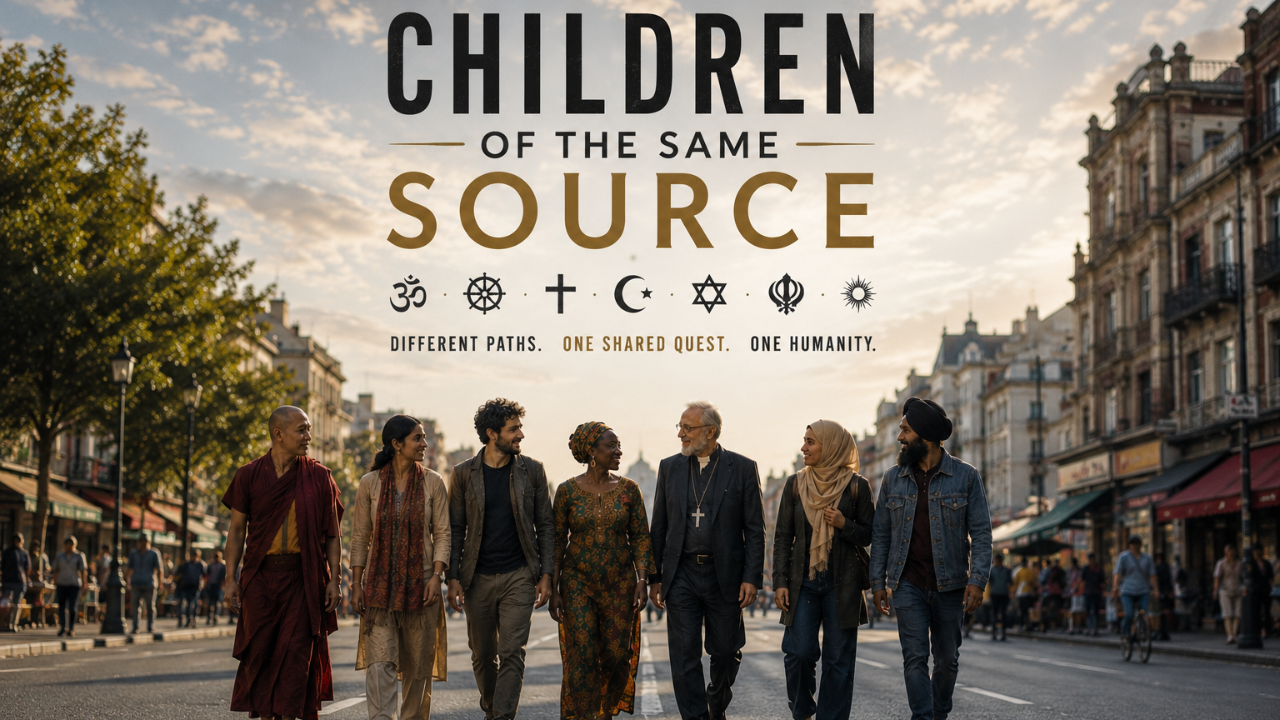
We often tend to imagine that religions and spiritual traditions are profoundly different from one another, especially when comparing the so-called Abrahamic traditions, usually described as monotheistic, with those commonly presented as polytheistic.
And yet, my recent journey to India confirmed an intuition I have carried within me for a long time: the differences are often far less profound than they appear.
A human being remains a human being.
Wherever they are born, whatever language they speak, whatever stories are passed down to them, they remain animated by the same inner structure, the same fundamental intelligence, the same way of inhabiting the world and seeking to give meaning to it.
When human beings discover bone, they instinctively imagine certain possibilities.
When they discover wood, they seek to reveal its potential.
When they discover stone, they already sense what it could become in their hands.
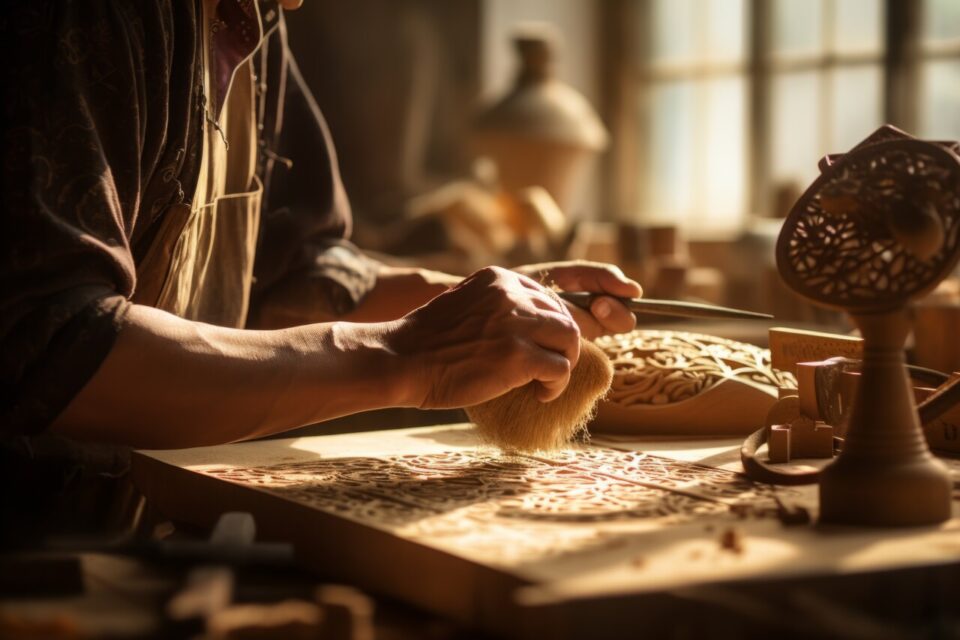
This is why, throughout history, we find civilizations separated by oceans, mountains, or millennia developing remarkably similar uses from the same materials.
Wood becomes a tool, a shelter, or an instrument.
Stone becomes a monument, a symbol, or a sanctuary.
Clay becomes a vessel, an artwork, or a form of memory.
Even in the most ancient times, this phenomenon is visible.
We discover cave paintings in Africa, Europe, the Arabian Peninsula, and many other regions of the world. And yet, in many cases, these peoples did not know one another. They did not trade together. They had never even heard of each other.
And despite this, we find similar gestures, similar symbols, the same desire to tell stories, to transmit, to leave a trace.
It is a though the human being standing before the wall of a cave naturally feels the need to inscribe something of themselves upon it.
The colors change.
The forms change.
The styles change.
But the impulse remains.
Because the human brain remains the human brain.
Contexts differ, horizons expand or narrow, circumstances vary, yet certain fundamental tendencies remain remarkably constant.
A people do not even need to copy another people.
Very often, communities that have never met eventually discover similar ideas, develop comparable solutions, and create symbols that strangely echo one another.
The same is true in the spiritual realm.
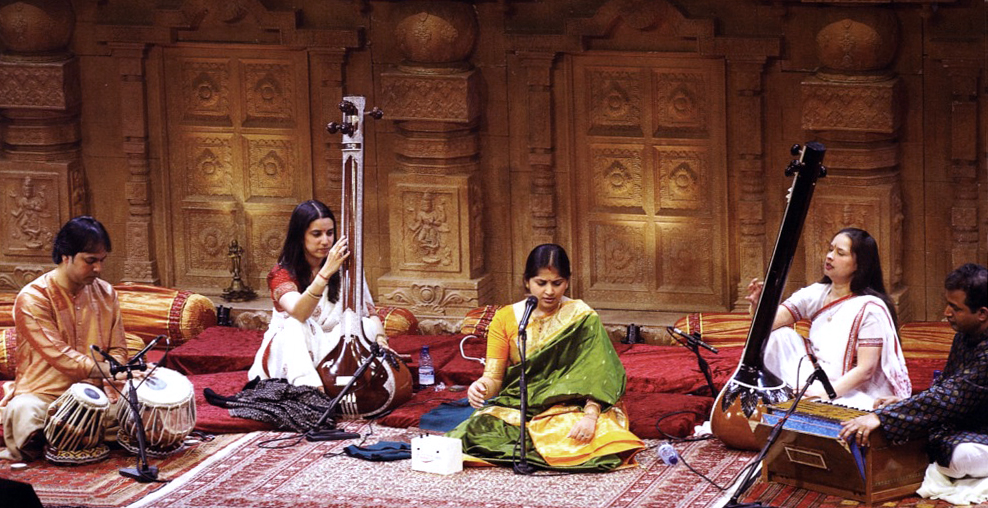
When human beings seek to approach the Absolute, when they attempt to enter into relationship with the Mystery that transcends them, when they try to express love, gratitude, wonder, or devotion, they often end up following paths that, despite their apparent differences, reveal astonishing similarities.
They sing.
They dance.
They pray.
They meditate.
They recite.
They create rituals.
They consecrate places.
They seek to transform ordinary gestures into gestures filled with meaning.
The forms vary.
The languages vary.
The narratives vary.
But the deeper functions often remain the same.
It is a little like flowers.
One is red.
Another is yellow.
A third is blue or white.
They differ in color, fragrance, and form.
And yet, a flower remains a flower.
Or like cuisine.
The cuisines of the world are infinitely diverse.
The ingredients change.
The spices change.
The flavors change.
Yet everywhere, human beings cut, mix, transform, cook, assemble, and share.
Everywhere, they seek to nourish life.
Spirituality often follows a similar logic.
This is why it is not uncommon to discover striking similarities between traditions that appear, at first glance, to stand in opposition to one another.
In sacred melodies.
In rhythms.
In collective recitations.
In devotional chants.
In forms of meditation.
In bodily movements.
In states of contemplation.
In the symbols used to speak about the Invisible.
The words change.
The languages change.
The theologies change.
The narratives change.
But the human impulse seeking to touch the Absolute remains astonishingly similar.

And the more one travels, the more one encounters other peoples, cultures, and traditions, the harder this reality becomes to ignore.
Beneath the diversity of colors, clothing, symbols, and beliefs, something deeper gradually appears.
Something universal.
The same quest.
The same wonder.
The same longing for the Infinite.
The same desire to give meaning to existence.
The same movement toward that which transcends us.
And perhaps also the same aspiration to rediscover that
Unique Source
wich human beings have never ceased to seek, each through their own words, symbols, songs, and paths.