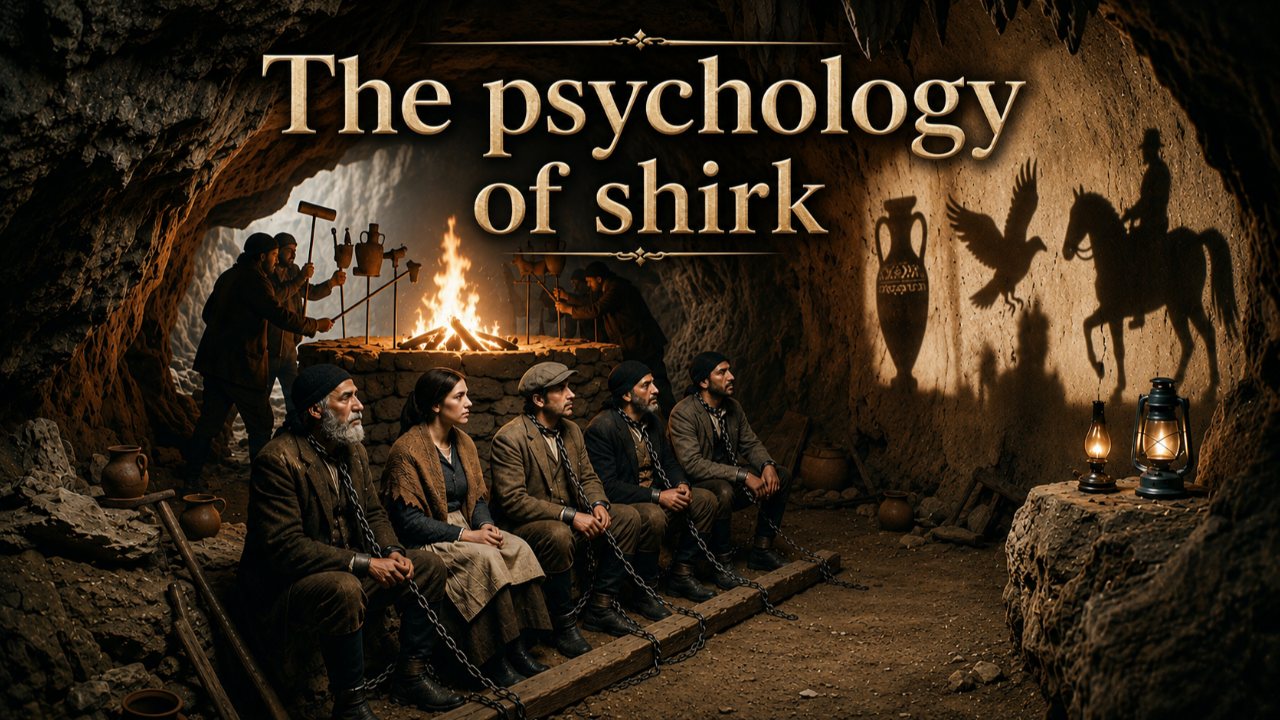
A human being enters into a dynamic of shirk when they become trapped within a system of beliefs, representations, identities, and ways of living inherited from their cultural, familial, or religious environment, to the point that they are no longer able to step back and examine it with clarity.
Over time, they become deeply attached—sometimes fanatically attached—to the narratives, values, customs, and worldviews transmitted by their parents, community, or ancestors. Not because they have consciously explored them, tested them, or arrived at them through a sincere search for truth, but because these inherited structures have become the very lens through which they perceive reality.
The phenomenon of shirk cannot be reduced to the simplistic image of someone bowing before a statue made of stone or wood. Such a reading touches only the surface of a much deeper reality.
The real issue begins when a person becomes incapable of moving beyond the mental, cultural, emotional, or identity framework within which they were formed. When they become prisoners of a worldview they can no longer observe from the outside. When they lose the ability to distinguish between truth itself and the particular historical, cultural, religious, or psychological forms through which they received it.
At that point, it is no longer merely certain ideas that are being preserved. The entire system becomes unconsciously sacralized.
Traditions become sacred.
Inherited narratives become sacred.
Collective identities become sacred.
Cultural and religious inheritances become sacred.
They are no longer approached as possible vehicles of truth, but as truths in themselves. They cease to serve the search for truth and begin to replace it.
From that moment onward, questioning becomes threatening.
A new perspective feels like an attack.
A different interpretation appears dangerous.
The reaction is often immediate: to refute, reject, dismiss, and discredit.
And very often, the emotional intensity of the reaction is far greater than the issue itself would justify. A disproportionate defensive response emerges, as though the individual—or the group—were fighting for its very survival.
In many cases, this defensive reaction eventually turns into hostility, exclusion, persecution, or social lynching.
At that point, what is being protected is no longer truth.
What is being protected is a psychological structure.
An identity.
A sense of belonging.
A familiar narrative through which individuals and communities have learned to understand themselves and the world around them.
This is why the Qur’an repeatedly returns to one of the most common responses given to the prophets:
“We found our forefathers upon a certain path, and we are following in their footsteps.”
The problem is not the existence of tradition.
The problem is not heritage.
The problem is not culture.
Every human being inherits something.